Tackling racial harassment in higher education: progress since 2020
Last updated on Tuesday 14 May 2024 at 1:03pm
In November 2020, we published Tackling racial harassment in higher education, a set of recommendations designed to tackle racial harassment as part of efforts to address racial inequality in UK higher education.
Our 2023 update reveals the findings of our review of the impact of this guidance, and sets out how universities can improve further.
This review included a survey of our members and focus groups of senior staff with responsibility for tackling racial harassment and university staff members and students with lived experience of racial harassment.
Remote video URL
Racism is not a problem that people from minoritised ethnic groups should have to face alone. It is a problem the whole university community needs to be responsible for, with strong leadership from the vice-chancellor or principal.
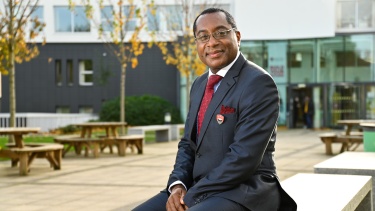
Professor Charles Egbu
Vice-Chancellor, Leeds Trinity University and Chair, Universities UK's Racial Harassment Advisory Group
Our recommendations for senior leaders
We know that universities are at different stages in meeting the recommendations set out in our 2020 report. It's vital that universities maintain their focus on tackling racial harassment and making our universities safe places to work and study for everyone.
The sector cannot reach its full potential unless it benefits from the talents of the whole population, and individuals from all ethnic backgrounds can benefit equally from the opportunities it provides.
To drive forward further progress, senior leaders at universities now need to:
- Ensure work to tackle racial harassment is informed by internal and external expertise in this area.
- Ensure that there is accountability for making progress in tackling racial harassment within the university and that success is clearly defined and understood.
- Work with staff and students with lived experience of racial harassment on meaningful participation and co-production, ensuring the purpose of this work is clear and that the wellbeing of staff and students with lived experience is prioritised.
- Communicate the university’s evidence and resulting approach to racial harassment clearly to staff and students, including on reporting channels and level of progress made in tackling racial harassment.
- Review and continuously improve the training offered to staff and students, ensuring it is reaching the whole student population and relevant staff members, and that it is meaningful, with space for reflection.
It’s vital that the sector remains focused on tackling racial harassment and that Black, Asian and minority ethnic staff and students feel safe and included on our campuses. We are committed to supporting Advance HE’s work on race equality, so that the sector has the capacity, guidance and expertise necessary to deliver meaningful change in implementing these recommendations.
Our research
We engaged with the sector on tackling racial harassment between October 2022 and March 2023, including:
- an online survey of universities to examine what progress had been made since our first report was published in November 2020, with 25 responses from university senior leaders with responsibility for tackling racial harassment
- a focus group with university senior leaders with responsibility for tackling racial harassment
- a focus group with university staff members with lived experience of racial harassment
- a focus group with students with lived experience of racial harassment
- input from UUK’s Student Policy Network of vice-chancellors
We also commissioned polling of 828 students on their experiences of racial harassment, repeating the polling carried out by EHRC in 2019.
How is the sector tackling racial harassment?
Our survey data from senior university staff and focus groups helps to illustrate how the sector is working towards tackling racial harassment on campus.
We have found examples where universities have made significant progress towards our recommendations. We have also identified common barriers to tackling racial harassment, and found that there is more that can be done by university leaders, their teams and the wider higher education sector to make further progress in this area.
- Almost all (92%) respondents to our senior staff survey told us that their vice-chancellor or principal had made a public acknowledgement that racism and racial harassment negatively impact staff and students, and that racial harassment will not be tolerated.
- 68% of respondents revealed that their university had developed an institution wide strategy for addressing racial inequalities.
- 76% of respondents told us that their university had ensured that both students and staff members were aware of how to report incidents of racial harassment at their universities.
- Just over three quarters (76%) said that their institution supported or instigated open discussions about racism and racial harassment for staff and students.
- Almost all respondents told us that their universities had online reporting tools (96%) and anonymous reporting (92%).
- All respondents told us that unconscious bias training was available for staff and students.
What are students' experiences of racial harassment?
Through our student survey (828 students polled) we found that unfortunately a significant proportion of ethnic minority students are still experiencing racial harassment at university. However, we also found evidence of some positive steps in this area, including an increase in the proportion of students reporting racial harassment to their university.
- 24% of students from an ethnic minority had experienced some form of racial harassment in higher education. This figure rises to 45% for Black students.
- The most common form of racial harassment experienced by respondents was racist name calling, insults or ‘jokes’, experienced by more than half (55%) of polled students who had experienced racial harassment.
- Four in 10 students (42%) who experienced racial harassment in the 2021–22 academic year reported it to their university. This is an increase of 9% from polling carried out by the Equality and Human Rights Commission (EHRC) in 2019.
Promoted content
Pdf
Survey data
Remote video URL
Case studies
We spoke to 13 universities across the UK about the work they're doing to tackle racial harassment.

Remote video URL
Promoted content
Pdf