
The Globalink Research Internship is a competitive programme for undergraduate students to take part in a 12-week research internship at a university in Canada. Kevin Shi, a student from The University of Manchester, is a previous Globalink Research Internship participant. In this blog, Kevin shares his experiences.
Why I chose the Globalink Research Internship programme
As a materials science and engineering student at The University of Manchester, I’ve always been curious about how research can make a tangible difference in the world. When I discovered the Globalink Research Internship (GRI) programme, I saw it as the perfect opportunity to gain hands-on research experience in a new environment, expand my worldview, and challenge myself both academically and personally.
I was fortunate to be selected for a 12-week placement at the University of British Columbia’s Okanagan campus (UBCO) in Kelowna, working under Dr Sumi Siddiqua in the field of sustainable construction materials.
Research with real-world impact
My project focused on investigating the influence of water content and superplasticiser on the mechanical properties of geopolymers made from blast furnace slag and wood fly ash. In simpler terms, we were developing an eco-friendlier alternative to traditional cement by repurposing industrial waste materials – something that could significantly reduce CO₂ emissions in the construction industry.
While I had studied the theory of geopolymers before, this internship was my first time working with them in a lab setting. I learned how to mix and cure samples, run mechanical tests like compressive strength analysis, and analyse data using statistical methods. But beyond the lab techniques, what really stuck with me was the interdisciplinary collaboration – working closely with civil engineers, chemists and materials scientists toward a shared sustainability goal.
A day in the life: lab work and lake views
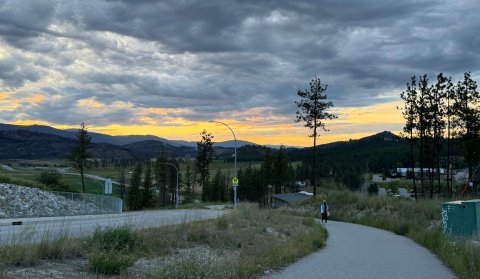
No two days were the same during my internship. Most mornings started with a bike ride through Kelowna’s scenic trails to get to campus. Once at the lab, I’d meet with my research supervisor or graduate student mentors to plan out experiments for the day – whether casting new geopolymer samples or checking the strength of week-old specimens.
Afternoons were often spent in the computer lab, analysing test data or reviewing academic papers. But what I appreciated most was the balance. After lab hours, I’d head to the nearby Okanagan Lake, go to the gym, or hike one of the many surrounding trails. Coming from a busy city like Manchester, the natural beauty and relaxed pace of life in Kelowna offered a refreshing change.
Weekend escapes: Vancouver adventures
One of the highlights of the summer was a weekend trip to Vancouver. After weeks of focused lab work, it was the perfect chance to explore one of Canada’s most vibrant cities. I visited the Capilano Suspension Bridge (and yes, it’s just as breathtaking – and slightly terrifying – as it looks in photos), wandered through the city’s zoo, and indulged in some incredible food from all corners of the globe. Vancouver’s mix of urban energy and natural beauty reminded me how diverse and exciting Canada really is.
It was also a great bonding experience with other interns. We swapped stories, took way too many photos, and even debated whether poutine counts as a complete meal. (Verdict: it does.)
Lessons beyond the lab
Living and researching in Canada taught me far more than just lab skills. I developed greater independence and adaptability – whether it was navigating a new country, troubleshooting unexpected lab results, or even figuring out how to open a Canadian bank account! I also made friends from all over the world, sharing meals, stories, and weekend trips across British Columbia.
Looking ahead
Before the internship, I was primarily focused on academic research. But my time in Canada helped me realise how research can translate into real-world solutions – and the importance of communication and interdisciplinary teamwork in making that happen. It’s inspired me to explore roles in industry that combine technical depth with societal impact, particularly in sustainable materials or clean energy sectors.
Would I recommend the GRI programme? Absolutely. It’s more than just a research internship – it’s a life-changing experience that broadens your horizons, academically and personally. Whether you're chasing a career in research, industry, or something in between, the perspective and skills you gain are invaluable.