Is your institution looking to grow its provision of inclusive global study opportunities? Drawing on his experience at the University of Leeds, Professor Martin Ward discusses the transformative potential of Collaborative Online International Learning (COIL) and its role in delivering equitable, globally engaged learning.
Globally engaged education for all students on UK campuses
Collaborative Online International Learning (COIL) brings together educators in different countries to co-design and co-deliver shared teaching and learning assignments within their modules. Students work in groups with their peers from the overseas university, typically over several weeks, to complete learning tasks embedded in the curriculum. Unlike guest lectures or ad hoc collaboration, COIL is intentionally designed to develop intercultural, collaborative and subject-specific skills over a sustained period of time (for more see Defining collaborative online international learning (COIL) and distinguishing it from virtual exchange, Hackett et al., 2024).
Universities can build on existing collaborations, or develop new partnerships with overseas institutions, to design and deliver COILs for students on UK campuses with their peers overseas. Since it’s embedded in the curriculum it doesn’t cost a penny extra to students and it’s flexible enough to be applied in any discipline. This is an inclusive approach to providing a truly international education for all students across UK campuses.
While physical mobility during a programme of learning can be highly transformative for students, as it was for me during my undergraduate days at Leeds where I had the chance to study at universities in China and Japan, there are barriers which often prevent students from engaging in mobility (see Gone International: a new generation). COIL has the potential to provide all our students with dynamic, globally engaged, transformative, eye-opening learning experiences which prepare them to make a positive impact on the world throughout the course of their lives.
In the UK, Coventry University has been the pioneer of COIL, having provided several thousand students with COIL experiences over the past more than 10 years. More broadly, take-up by UK universities has been patchy, with only a few universities implementing more than a handful of COILs annually. In an era of ‘de-globalisation’ and seismic geopolitical shifts when the UK’s place in the world is in flux, this represents a huge, missed opportunity which should now be addressed.
COIL at the University of Leeds
As part of its strategic commitment to providing inclusive global study opportunities, the University of Leeds has been working to embed COIL at scale since 2023, contributing to a wider move to embed experiential learning (EL) across all disciplines. From only a couple of COIL modules pre-2023, the university has now embedded more than a dozen COILs in various disciplines, and this continues to grow.
This transformation has been facilitated by strategic leadership, support from senior leaders, broad recognition of the strategic role of COIL, and mature collaborations and partnerships with overseas institutions in which to root COIL collaborations. Success also required the pooling of expertise and strong engagement from both academic and professional service colleagues.
This expanded provision has led to such COIL projects as an interdisciplinary one run by Dr Alexandra Holmes on Global Challenges in Biomedical Sciences. This brought together 30 students from Leeds and Nagoya University (Japan) in 2024-25 to explore solutions to air pollution. Dr Holmes observed that, ‘This COIL significantly enhanced students’ capacity for creative problem-solving and broadened the scope of their thinking, as evidenced by their presentations at the end.’
Second year neuroscience student Ella Butterfield who took part in the COIL commented that the collaboration, ‘made the portfolio more personal because we actually understood what people in Japan thought, and their opinions on air pollution’ (see Global challenges tackled together).
Key recent developments in COIL in the UK
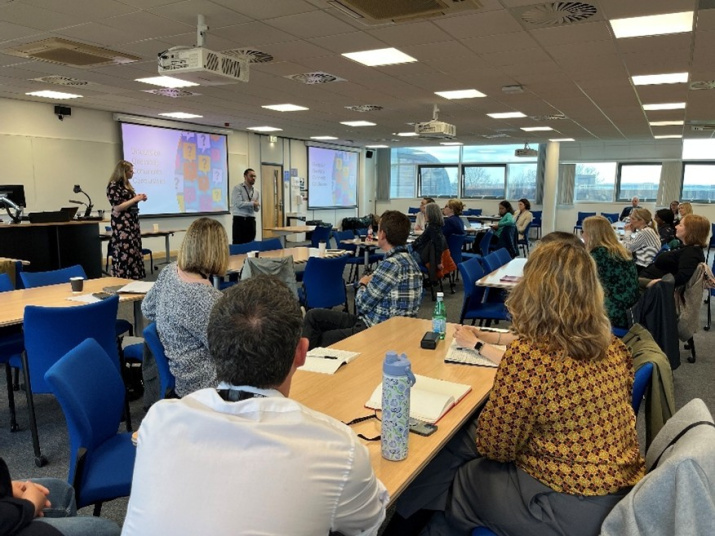
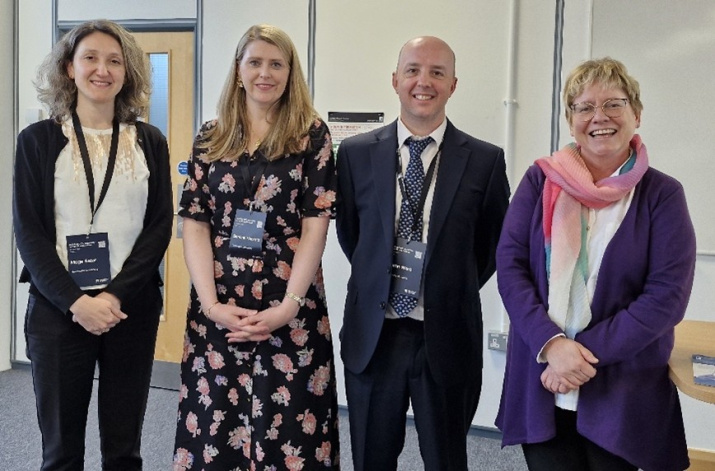
Recognising the generally weak take-up of COIL nationally across the UK, in April 2025 Leeds hosted a UK and Ireland symposium on COIL, seeking to ignite broader take-up of COIL across both countries. Building COIL capability in the UK and Ireland was attended by colleagues with diverse academic and professional service expertise from across both countries. The symposium proved to be just the spark that was needed to initiate a strategic network for COIL.
Building COIL capability in the UK and Ireland symposium, April 2025, University of Leeds.
Other sector-leading work, such as The Open University’s Open Societal Challenge on International and intercultural online learning experiences for all students through Virtual Exchange (VE) led by Professor Mirjam Hauck, has also been happening concurrently (informed by the findings of the UK Survey of current and planned VE activity, barriers, and facilitators of VE programmes). This all serves to demonstrate a shared sense of the underexplored potential for COIL/VE in UK and Irish higher education.
UNICOIL: joining forces to stimulate the proliferation of COIL in the UK and Ireland
Born out of the symposium at Leeds, UNICOIL – the UK and Ireland COIL Network – was founded in 2025 with the three-pronged aim of scaling up COIL capacity, stimulating research into COIL, and developing a supportive COIL community. UNICOIL is led by a steering committee of 15 colleagues with academic, leadership and professional service expertise from 11 universities in Ireland, Northern Ireland, Scotland, Wales and England, as well as the Netherlands and Germany.
Participating institutions include Atlantic Technological University, Cardiff University, Dublin City University, International University of Applied Sciences, Queen's University Belfast, Robert Gordon University, Sheffield Hallam University, The Hague University of Applied Sciences, Trinity College Dublin, University College Dublin and the University of Leeds.
UNICOIL has begun work to drive transformation towards expanded provision of inclusive globally engaged education at universities across the UK and Ireland through COIL. UNICOIL’s recent introductory webinar in March was attended by almost 60 academic and professional service colleagues from universities in the UK and Ireland as well as other countries.
UNICOIL 2026 Symposium
This April’s UNICOIL 2026 Symposium to be held at Sheffield Hallam University (23 April) promises to be a dynamic networking and impactful event. It features a line-up of prominent speakers well known globally in the field of COIL and Internationalisation at Home (IaH), such as UNITAR, Universities UK International and more.
Colleagues at universities in the UK and Ireland in particular, who are keen to enable greater take-up of COIL and international education at their institutions, are warmly welcomed to attend the symposium. Colleagues are also encouraged to join the consortium-based UNICOIL network. By joining this network, institutions can pool expertise and work cooperatively to help advance COIL across both countries.
For further information, please contact UNICOIL chair, Professor Martin Ward of the University of Leeds.
Future prospects for globally engaged learning on UK and Irish campuses
Momentum is building around COIL and VE as tools to provide students on UK and Irish campuses with unique opportunities for globally engaged learning. Rapid technological advances are facilitating increasingly accessible and dynamic remote interaction. At a time when humanity faces the climate crisis and geopolitical earthquakes, COIL presents universities with a powerful tool to provide transformative collaborative international learning experiences for all our students.
Now is the time for universities across the UK and Ireland to greatly enhance our provision of inclusive international education through COIL. It matters now more than ever.
Words by: Professor Martin Ward, University of Leeds.