

In this guest blog, Luisa Gwendolyn Aarhuus discusses her experiences as part of the Mitacs Globalink Research Internship (GRI) programme at the University of Waterloo in Ontario.
'Rejection is redirection'
During the summer after my first year at Durham University (2024), I found myself scrolling through the Global Opportunities webpage, looking at year abroad options and dreaming about where I might spend part of my degree. That's when I stumbled across the Mitacs Globalink Research Internship (GRI) pogramme.
I'd never heard of it before.
At the time, I was already considering applying for a year abroad in Canada, so a fully funded 12-week research internship at a Canadian university sounded almost too good to be true. I remember thinking, 'I've got nothing to lose'. If I wasn't successful, life would carry on as normal. If I was, I might end up spending even more time in Canada, which certainly didn't sound like a bad outcome.
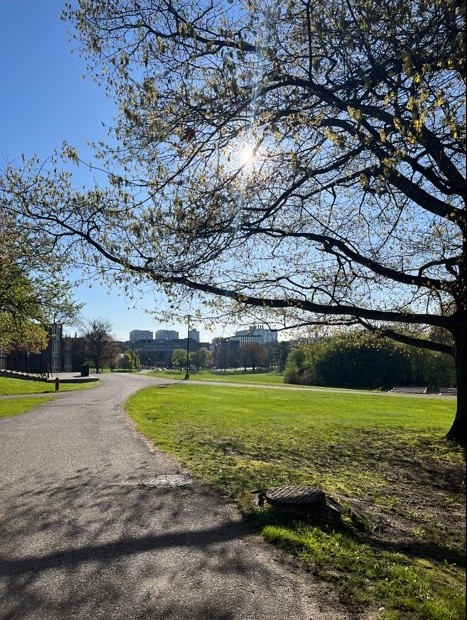
As it turned out, I wasn't offered a place on Durham's Canadian exchange programme (it's incredibly competitive). Instead, I was matched with a research internship at the University of Waterloo in Ontario, for Summer 2025, around an hour and a half from Toronto. Looking back now, that rejection led me to one of the most rewarding experiences of my degree.
What is the Mitacs Globalink Research Internship?
The Globalink Research Internship is a fully funded programme that matches eligible undergraduate students with 12-week research projects at more than 70 universities across Canada, taking place between May and October. Open to students with at least one year of their degree remaining and an average of 65% or higher, the programme offers the chance to work alongside leading academics while experiencing life in a new country.
Alongside hands-on research, Mitacs also offers professional development workshops, networking opportunities and the chance to build skills beyond the classroom. Whether you're considering postgraduate study, a career in research or simply want to challenge yourself, it's an incredible opportunity for academic, professional and personal growth.
Finding a project I genuinely cared about
If I'm being completely honest, one of the main reasons I applied for my project was because it focused on food. I've always been passionate about food, so a project exploring local food systems immediately caught my attention. Sometimes the simplest reasons lead to the best opportunities.
During my internship, I designed, co-facilitated and analysed two focus groups exploring how local food systems could be reimagined to create more sustainable futures at the University of Waterloo. Alongside this, I completed a literature review identifying gaps in Waterloo's existing food system and opportunities for innovation.
The experience was about far more than collecting data. It strengthened my confidence as an independent researcher, developed my qualitative and quantitative research skills, and gave me valuable experience of ethics processes and collaborative academic research.
The most rewarding part? The project didn't end after those 12 weeks. My supervisors and I have continued working together since I returned to the UK, and we're now collaborating on an academic paper titled Reimagining Campus Nutrition: A Critical Pilot Study on Secure Food Futures at the University of Waterloo. Knowing that a summer internship has developed into ongoing research is something I’m incredibly proud of.
Life outside the research
Of course, my time in Canada wasn't just about research.
One of the things I appreciated most about the internship was the flexibility. I met weekly with my two incredibly supportive supervisors (a huge shoutout to Steffanie and Lauren!) to discuss ideas and review progress, but beyond that, I had the freedom to organise my own workload.
Although I had a workspace in a research lab, I often chose to work from the main campus library alongside friends, or occasionally from home. Most days consisted of working in the morning, heading to the gym at lunchtime (North American university gyms are on another level, I highly recommend getting a membership!), before finishing up in the afternoon.
Weekends were for exploring. Living in Ontario gave me the chance to visit places I'd only ever seen online, including Toronto and Niagara Falls. Balancing meaningful research with the opportunity to explore Canada made the experience so much more than just an internship.


The challenges that made the experience worthwhile
As amazing as my internship was, I'd be lying if I said every day was easy. It was the longest I'd ever spent away from my family and friends, and there were moments when I felt homesick.
One particularly memorable disappointment came when I confidently ordered a cup of tea from Tim Hortons, hoping for a little taste of home. Let's just say... it didn't quite meet British expectations. Thankfully, their Iced Capps and Timbits more than made up for it!
Looking back, those moments of homesickness were just as valuable as the highlights. They taught me resilience, independence and confidence in ways I don't think I could have developed without stepping outside my comfort zone.
Advice for future applicants
The Mitacs application process usually opens during the summer and autumn before the internship begins. You'll need to submit your academic transcript, answer a few motivation questions, choose the research projects you'd like to apply for and provide a letter of recommendation from a lecturer or academic advisor. I asked my departmental academic advisor at Durham, who was incredibly supportive throughout the process.
One practical tip I'd give is to stay organised. Once you've been matched with a project, you'll receive lots of emails from both your home university and your host institution. Keeping on top of deadlines makes everything much less stressful.
It's also worth knowing that although the internship is fully funded, you'll need to cover initial costs such as flights and accommodation deposits before your funding is paid, so budget for these in advance. As soon as you arrive in Canada, opening a Canadian bank account should be one of your first priorities, as this is how you'll receive your funding.
Finally, Mitacs provides guidance on accommodation and visas, making both processes far more straightforward than I first thought they were going to be. If you do however arrange accommodation independently, just be mindful of potential scams.
A summer that changed more than I expected
When I first clicked 'apply', I thought I had nothing to lose.
What I gained was far more than a summer abroad.
I grew as a researcher, built lifelong friendships, explored a country I'd always wanted to visit and gained confidence in myself both academically and personally. The experience also opened doors I never expected, including continuing to collaborate on research long after returning home.
So, if you're even thinking about applying, my advice is simple: go for it. The worst that can happen is that you don't get matched with a project. The best? You might just find yourself on the other side of the world, working on research you genuinely care about, discovering opportunities you never imagined, and realising that sometimes rejection really is redirection.