
Prof Diane Crone (Director of the Centre for Health, Activity and Wellbeing Research, Cardiff Metropolitan University) discusses how Erasmus+ Sport can transform institutional reach and why UK universities should start building partnerships now ahead of 2027.
Ten years ago, when the UK voted to leave the European Union (EU), I had the stark realisation that the most enjoyable part of my academic job would come to an end.
Between 2011 and 2023, I was lucky enough to receive funding for seven Erasmus+ projects as both a partner and project lead, securing over €2.2 million in funding. These projects provided extensive opportunities for international collaboration, research, knowledge exchange and mobility.
Following the UK’s departure from Erasmus+, those opportunities came to an end. But now, fast forward a decade to January 2027, we will be eligible again for Erasmus+ funding. It’s an exciting time and something UK higher education institutions should be exploring.
What is Erasmus+ Sport?
Erasmus+ Sport is the EU's funding programme dedicated to promoting participation in sport, physical activity and voluntary activities across Europe and globally. It funds projects and events that use sport as a vehicle to tackle societal challenges and promote social inclusion and healthy lifestyles.
Successful projects bring together organisations from different countries to exchange knowledge and produce practical outcomes that can benefit communities across Europe.
For universities, it provides a platform to apply research expertise in real-world settings while building long-term international partnerships.
Why should UK universities get involved in Erasmus+ Sport?
Erasmus+ Sport enables universities to build international partnerships, share expertise, increase research impact and create opportunities for both staff and students.
While the word ‘sport’ may suggest a narrow focus, the programme supports work across a wide range of areas including health, wellbeing, inclusion, education, coaching, physical activity, community engagement and public health. Many universities are already delivering activity that aligns strongly with Erasmus+ Sport priorities.
The programme also creates opportunities to work beyond the higher education sector, bringing together universities, local authorities, charities, non-governmental organisations and community partners to address shared challenges through collaboration and innovation.
For institutions looking to strengthen international partnerships and expand their global networks, Erasmus+ Sport can be a valuable route to achieving those goals.
What do you need to know to get started?
Many people ask the same questions when they first consider Erasmus+ Sport: how do I find partners? How do I become involved in a project? And when is the right time to lead one myself?
From my experience, there are five key things to remember.
- Build your network. Attend European conferences, join EU networks and take every opportunity to meet potential collaborators. My involvement in networks helped me establish relationships that later developed into successful projects.
- Develop relationships before applying. Application assessors look favourably on partnerships that can demonstrate previous collaboration, whether through joint publications, exchange visits or other shared activities.
- Create a balanced consortium. Successful projects usually include partners from across Europe, with a good geographical spread and a fair distribution of funding and responsibilities. This can be tricky to achieve when you have high-income countries alongside lower-income countries where day rates can be as much as half those of the others. But a balance must be struck to base the project on equal participation.
- Invest time in the application. Successful bids require careful planning and close attention to the programme requirements, particularly around areas such as dissemination, exploitation and project management. Make sure every aspect of the project is included in the plan and financial breakdown.
- Be prepared for the commitment. Like many projects, prepare to give more time and effort than you might have budgeted. International collaborative projects are hugely rewarding, but require strong communication, quality assurance and coordination to keep partners aligned and projects on schedule. After all, there are no opportunities to get extensions on these projects!
Although leading a project may seem daunting, many academics begin by joining an existing consortium before progressing to coordinating projects themselves, as I did.
What a successful Erasmus+ Sport project can achieve
One of the projects I led was the Supporting Policy and Action for Active Environments (SPAcE) project, a three-year, €650,000 knowledge-exchange project involving 10 partners across five EU countries.
SPAcE aimed to support healthier, more active communities by creating sustainable urban active environments in five EU implementation sites (municipalities): Latvia, Greece, Spain, Italy and Romania. Urban active environments (UActivE) are environments that prioritise walking, cycling and taking public transport to increase population physical activity levels.
Working together, municipality partners, supporting partners and local communities co-produced action plans to make the physical and social environments in these municipalities more conducive to physical activity. The project was awarded an Erasmus+ Success Story and Good Practice Example by the Directorate-General for Education, Youth, Sport and Culture (DG EAC).
As well as the five UActivE Action Plans, the project developed supporting guidance for other municipalities across the EU to replicate the process. These were free to download in eight languages.
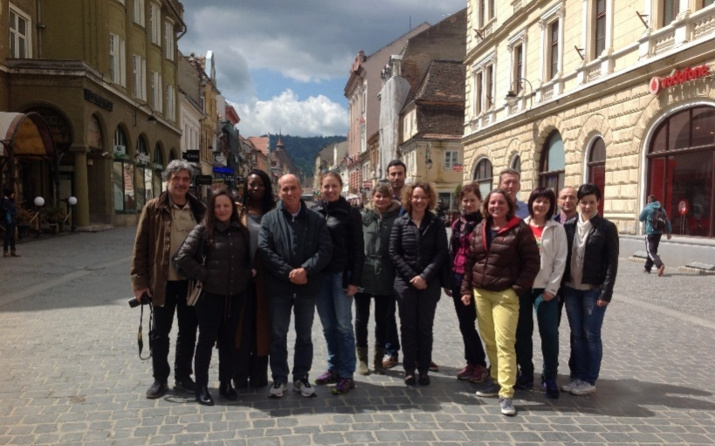
The SPAcE team, at a meeting in Brasov, Romania, with partners from Switzerland, UK, Spain, Greece, Romania, Finland, Latvia and Italy.
Benefits of Erasmus+ Sport for institutions, staff and students
During my 12 years of participation, Erasmus+ projects brought over €2.2 million of funding to Cardiff Metropolitan University while creating long-term international partnerships that continue to generate research collaborations, mobility opportunities and academic partnerships today.
Our experience reflects the broader value that Erasmus+ can bring to universities.
As well as project funding, participation can increase research impact, international partnerships and publication opportunities. It can also enhance institutional reputation and global profile.
Participation creates valuable opportunities for staff, too, through knowledge exchange, mobility opportunities and new collaborations, often leading to research partnerships and academic outputs.
Likewise, students benefit through international learning experiences, developing intercultural skills, building relationships with peers and academics across Europe, and gaining perspectives that enhance both their studies and future employability.
The partnerships formed through Erasmus+ extend beyond academic institutions. They often include local authorities, third sector organisations, non-governmental associations and more.
What I have gained from taking part
Taking part in EU projects has been an enjoyable and valuable time in my career, enhancing my career significantly and making me the academic I am today.
I started my EU funding career with two small study visits to Spain and Slovakia. During those visits I soon realised what an amazing network there is in the EU and how being part of that would help shape ideas for knowledge exchange projects and mobility opportunities going forward.
Over time, leading projects and participating as a partner provided me with project and financial management experience, as well as cultural, political and travel experiences. The relationships built through these projects have led to further career opportunities, including invited conference presentations, PhD viva examinations, mobility opportunities and academic publications. I now have colleagues in over a dozen countries and have learnt so much from having a window into their world.
All these opportunities have been converted into measures of esteem which have helped my progression through academia and provided an enhanced profile for my university outside of the UK.
Personally too, I have made lifelong friendships with some of my previous colleagues, travelled to places that I would never have visited otherwise, and experienced culture firsthand with people who live and work in those communities.
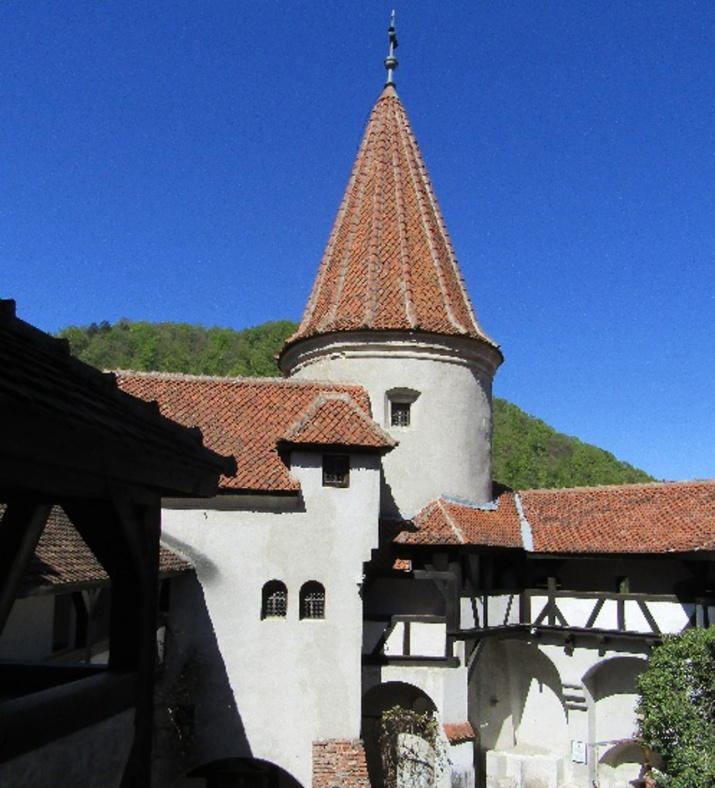
Bran Castle, Romania
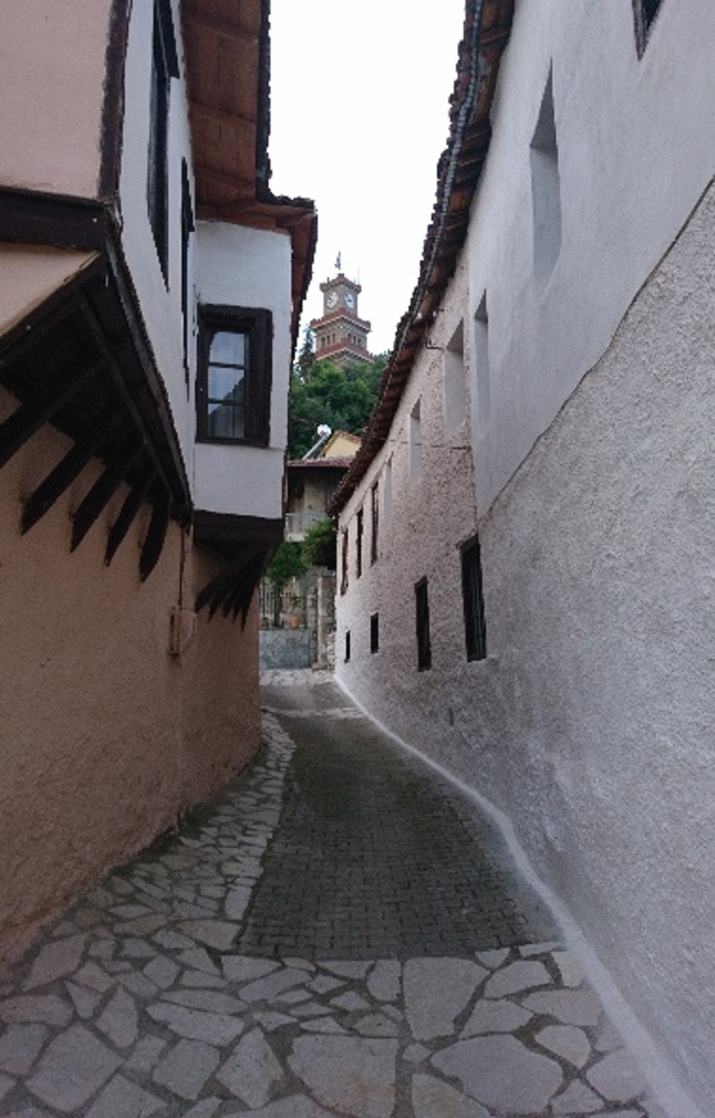
Trikala, Greece
Start building relationships now
As the UK returns to Erasmus+ in 2027, I hope others will have the opportunity to experience the benefits that I have enjoyed throughout my career.
As I’ve shown, working across countries, exchanging ideas, hearing different perspectives, and learning what works (and sometimes what doesn’t) all contribute to academic and personal growth. The cross-cultural understanding that comes from learning policies, systems and perspectives brings a richness to your work that is difficult to achieve in any other way. In my experience, it has made me a better academic, researcher and project leader.
Whether you’re an academic, professional services colleague or university leader, Erasmus+ Sport has something to offer.
My advice is simple: start talking to people, start building relationships, and don’t be afraid to take that first step. You really do have nothing to lose but the opportunity!