
When the UK joined Horizon Europe in January 2024, it marked an important moment for our universities and researchers. However, association alone is not enough. To make the most of this opportunity, we must act decisively to re-build European relationships and demonstrate that the UK’s participation in Horizon Europe delivers value for money.
To support this ambition, Universities UK International (UUKi) led a programme of work – supported by Wellcome – focused on boosting UK participation in Horizon Europe and re-engaging with European partners. What did we achieve, and what did we learn? Below, we reflect on the programme’s outcomes and its importance for the future of international collaboration under Horizon Europe.
What we did
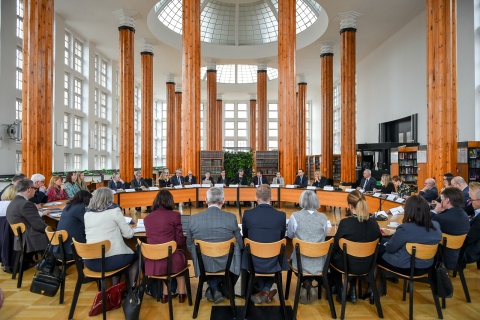
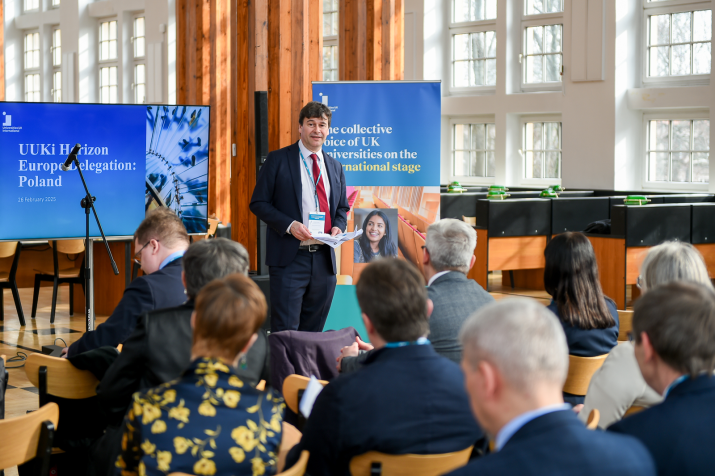
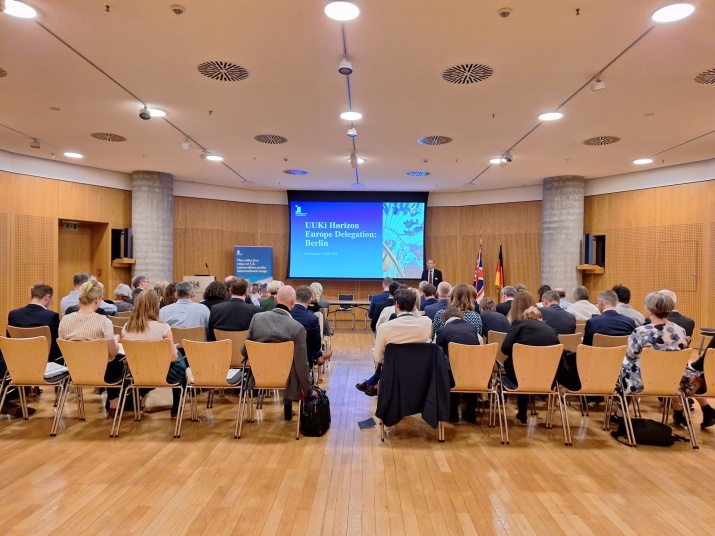
Over twelve months, we delivered six Horizon Europe delegations to France, the Netherlands, Norway/Nordics, Poland, Ireland and Germany, as well as a delegation to Brussels and an early-career researcher event. Each Horizon Europe country delegation brought together 10-15 senior UK leaders with their in-country equivalents to discuss priorities and opportunities for collaboration in Horizon Europe.
Delegates engaged with key in-country stakeholders, such as the Horizon Europe National Contact Coordinators and national research funders, to understand their Horizon Europe priorities and connections with the UK. They also learned from successful UK-in-country collaborative case studies, gaining insight into what makes a successful collaboration and discussing individual priorities during networking receptions.
Our delegations benefited hugely from the support of our in-country partners: our sister organisations including Universitas France, Universities Netherlands, Universities Norway and Universities Finland, Polish Rector’s Conference, Irish Universities Association and German Rector’s Conference, as well as the Science and Technology Networks (STN), the Embassies, and the British Council teams.
Lessons learned
The delegations have been largely positive. We found that UK association to Horizon Europe is much welcomed, and our in-country collaborators also reflected positively on our sector’s in-country presence. European partners also expressed significant enthusiasm for collaboration, and affirmed the UK’s and the in-country commitment to build on this platform and increase collaborations in Pillar II specifically.
We also identified areas for improvement. Greater support is needed for the UK’s early-career researchers (ECRs) and research managers, and mobility remains a barrier — including high visa costs.
Different countries offered unique and valuable insights. In Norway, we learned from their experience as an associated country, gaining a deeper understanding of how to build strong structures and processes that encourage active participation. In Poland, we saw an opportunity to raise awareness of the UK’s association and strengthen engagement, reminding us of the importance of continued dialogue and positive messaging across Europe so that collaboration can flourish.
Brussels engagement
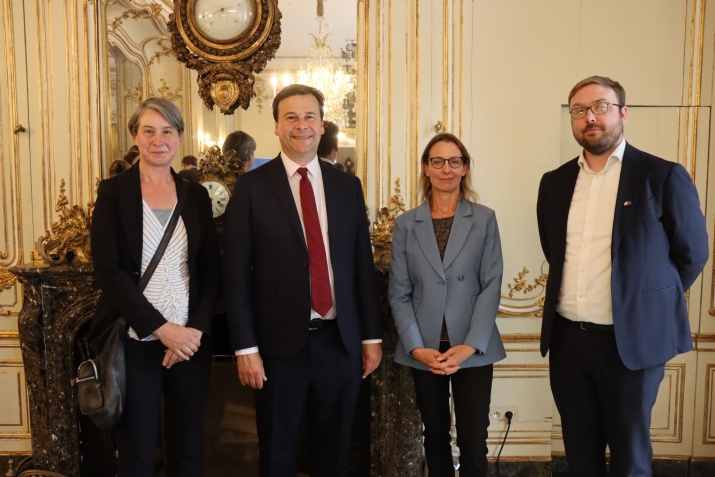
Our Brussels delegation focused on the UK higher education sector’s engagement with key Horizon Europe Brussels-based stakeholders, including the European Commission. We discussed what’s working well, areas for improvement, and opportunities to work collaboratively with the Brussels-based EU Member States/associated country offices via the Informal Group of Liaison Offices (IGLO) network.
In our engagement with the European Commission, we shared the UK sector’s eagerness to engage with Horizon Europe fully and rebuild partnerships long term, as a trusted partner from a like-minded country. We also discussed our sector’s appreciation of the reduced exclusions in the 2025 Work Programmes in areas such as quantum, where collaboration between the EU and UK can be mutually beneficial.
This was our third delegation to Brussels, and we’re fully committed to continuing more regular engagement with Brussels so that the UK sector’s views are represented and key messages are fed back to our members.
Early-career researcher event
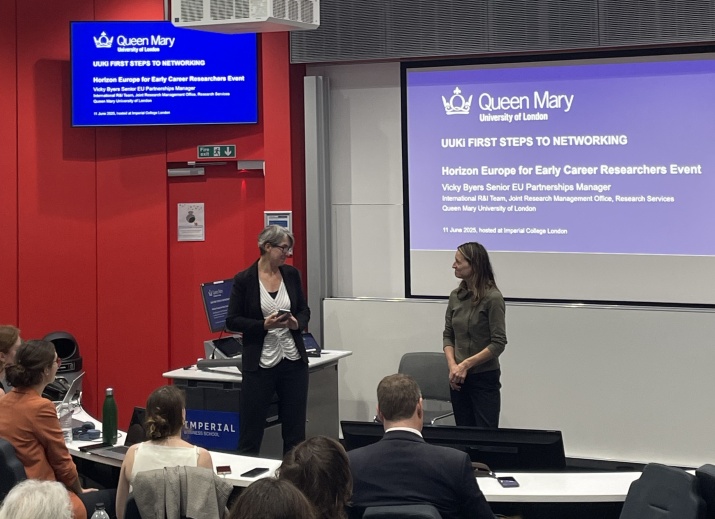
At Imperial College London, we held an event introducing early-career researchers to Horizon Europe. This proved to be highly popular and successful, and we were joined by colleagues from across different fields and our member institutions to learn more about how they can engage with the programme.
We saw the value of introducing colleagues to the programmes early in their careers, and surplus demand showed there’s a strong interest in engaging with Europe among the next generation of researchers. It was an excellent opportunity to share knowledge and learn about early-career researchers’ priorities in turn, and we’re keen to continue engaging with early-career colleagues throughout this framework programme and the next.
What's next?
While progress has been made, there’s still work to do to increase UK participation and leadership in collaborative projects, as well as boost our success rate. Horizon Europe 2025 and 2026-27 calls present an opportunity to achieve this, particularly in Pillar 2 where we bounced back less strongly.
The recent draft publication of the EU’s Multiannual Financial Framework (MFF, 2028-2034) also offers a chance to build this long term. UK universities are hugely in favour of UK association to Framework Programme 10 (FP10), and the UK Government should seek greater agency and influence in the programme’s development from the outset. FP10 remains a unique mechanism for supporting research, innovation and competitiveness. We welcome the government’s message that it’s keen to play a key role in the new programme’s development, and the positive signals that the UK wants to explore association.
Commenting on the end of the project, Martin Smith, Head of Policy Lab at Wellcome, said:
The scope, scale and success of Horizon Europe should not be underestimated. It provides tremendous opportunities for researchers across the continent to work together across borders, transforming science and our understanding of health.
"Association with the scheme brings unparalleled benefits but relies on committed collaboration between partners. The UUKi delegation meetings have been crucial to demonstrate that the European and UK higher education sectors are very willing to engage. Now, we must build on this momentum, maintaining and growing these relationships, so that we can best support high-quality research that will ultimately help us solve urgent, global health challenges.
Martin Smith
Head of Policy Lab, Wellcome
Jamie Arrowsmith, Director of Universities UK International, said:
We are hugely grateful to Wellcome for their generous support for this important and timely project. As the UK associated to the Horizon Europe programme, we understood that there was an acute need to reconnect with partners across Europe, and to rebuild our level of participation.
"This programme enabled delegations to six European countries, alongside high-level engagements in Brussels and events to help early-career researchers here in the UK to realise the opportunities offered by the world’s largest collaborative research funding scheme.
"We have already seen new partnerships and collaborations emerge as a direct result of this project – and look forward to continuing our work to maximise the contribution that our universities and researchers make through Horizon Europe.
"We’re grateful for Wellcome’s support that enabled us to engage in delegations to EU Member States and associated countries thus demonstrating first-hand the UK HEI sector’s commitment to and enthusiasm for Horizon Europe. This was an important milestone for UK’s involvement in European research and innovation collaboration, and our relationship building with the in-country sector representatives, funding agencies, and Brussels as well. We look forward to continuing this upward trajectory, fostering UK-European collaboration for a long time to come.
Jamie Arrowsmith
Director, Universities UK International